Now in your shopping cart!
Royalbooks

Publisher and editor - Ted Rosvall

Ted Rosvall started ROSVALL ROYAL BOOKS in 1985 and has so far published 20 books on The Royal Families of Europe. In 2006 he started ROYALTY DIGEST QUARTERLY - a successor to Royalty Digest,
A journal of Record, that was published 1991-2005 by Piccadilly Rare Books.

Contact us at
email: royalbooks@telia.com
tel: +46-515-37105
Write to us at ROSVALL ROYAL BOOKS, Falekvarna Enåsen 2, 521 91 FALKÖPING, Sweden.


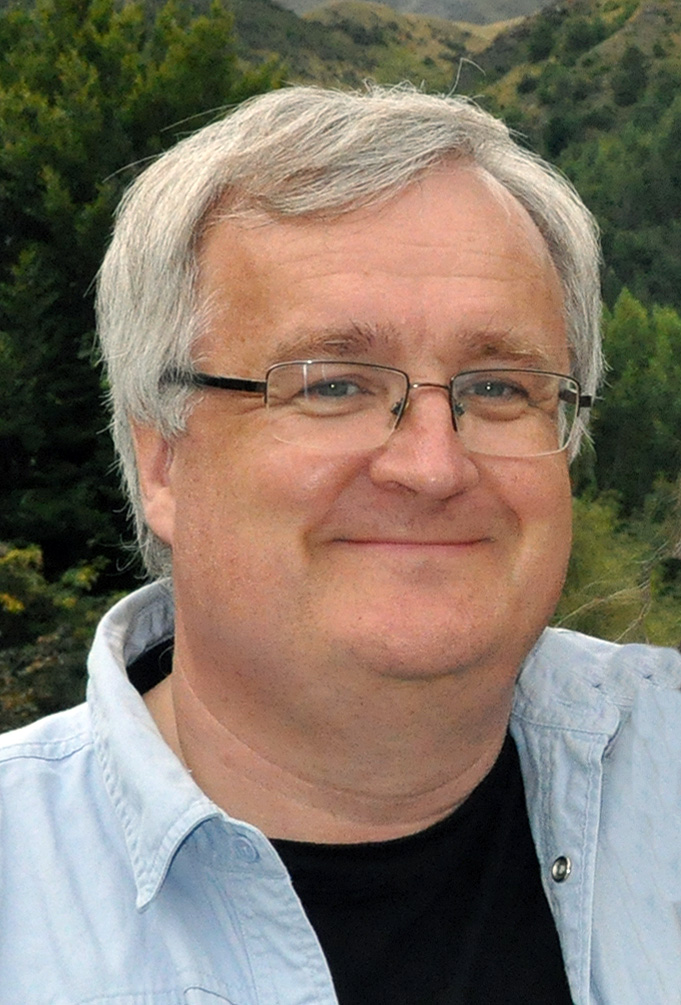
Ted is 60 years old, a church musician by profession, and a devoted genealogist. From 2000 to 2008 he served as president of the Federation of Swedish Genealogical Societies, an umbrella organisation for some 160 societies with a total of around 75.000 members. Apart from the Royal books, Ted has also published a Handbook on Emigration Research - mostly concerning modern research via the Internet in the US and Canada - and a collection of causeries and short stories (Ted's Thoughts). His research efforts have caused him to travel 19 times to the US and Canada, some 15 times to the UK and Germany and once to Australia and New Zealand.

 

He lives with his wife Margareta, a high school teacher, in a house outside Falköping which was built in 1795 by his great-great-great-grandfather, Isac Sandgren (1751-1820). There are four Rosvall children and two grand-children.


This editorial was published in ROYALTY DIGEST QUARTERLY 3/2012

Demorganisation

2012.12.21
Rumour has it, that Archduke Karl, AKA Karl Habsurg-Lothringen, the head of the Austrian dynasty is considering or has already decided  to “demorganize” all Habsburg marriages after 1918. If this rumour is true, it is quite a change and the world will instantly see a huge number of new Archdukes and Archduchesses. The Habsburg dynasty used to be very strict when it came to the house rules, and those that did not toe the line soon found themselves out in the cold, deprived of their titles and prerogatives, even their military grades and earthly possessions. In spite of these rather grave consequences, a great many Archdukes did eventually bolt, e.g. Archdukes Leopold Salvator, Josef Salvator, Heinrich Salvator, Johann Salvator, Franz Karl, Leo Karl and Karl Pius.

There is one remarkable exception; Archduke Franz Ferdinand, who was eventually allowed to marry the love of his life; the Countess Sophie Chotek, albeit the marriage was considered to be morganatic and the children of this union not able to inherit the throne. Had Franz Ferdinand lived to succeed his uncle, Emperor Franz Josef, he would probably have tried to alter the laws of succession, and there would have been no Emperor Karl.

Another break-through came in 1993, when Archduke Karl himself wanted to marry the Baroness Francesca von Thyssen-Bornemisza – a match that was by no means “ebenbürtig”. Archduke Otto, the groom’s father, who had hitherto refused to accept such marriages, finally came around and declared that marriages to women of the nobility would henceforth be acceptable – and in an effort to be fair, this decision even worked retroactively, thus creating dozens of new Archdukes and Archduchesses. Now the time apparently seems ripe for a further step, the demorganization (is there such a word?) of ALL Habsburg marriages since 1918.

Will other Royal Families follow suit? Well, in Bavaria it has already happened and chances are that several Royal and Princely families in Germany, especially those facing extinction, will jump on board. After all, when the reigning dynasties do not seem to be able to stick to the old traditions of equal marriages, why should the non-reigning do so?

So, will we see a number of “af Rosenborgs” be reinstated as Princes of Denmark, and a few “Bernadotte af Wisborgs” be transformed into Princes of Sweden? And will we see a retroactive action in favour of H.R.H. Princess Wallis, Duchess of Windsor?
 
I doubt it…


Ted Rosvall


   Karl Habsurg-Lothringen


This editorial was published in ROYALTY DIGEST QUARTERLY 4/2012

Blue Sapphire Anniversary

2012.12.21
The Queen and the Duke of Edinburgh recently celebrated their 65th wedding anniversary. In Swedish there is a special word for that occasion: Krondiamantbröllop – which would translate as "Crown Diamond Wedding". The Daily Telegraph suggests that the proper term in English would be "Blue Sapphire Anniversary", but I doubt that anyone has ever heard that one before…

Going through the genealogies of the various European dynasties, one can find very few marriages that have lasted as long as that, and only a handful that have been longer. (Are we yet to discover a royal couple that have reached 70 blissful years together?) In some cases one can argue, that although technically still married, husband and wife had long since separated, but for the sake of statistics, here is the short list:


Archduke Joseph Franz of Austria (1872-1962) and Princess Augusta of Bavaria (1875-1965) arried (1893) for 69 years

Henri, Count of Paris (1908-1999) and Princess Isabelle of Orléans-Braganca (1911-2003) Married (1931) for 68 years

Queen Juliana of the Netherlands (1909-2004) and Prince Bernhard of Lippe-Beisterfeld (1911-2004) Married (1937) for 67 years

Prince Alfonso of the Two Sicilies, Count of Caserta (1841-1934) and Princess Antonietta of The Two Sicilies (1851-1938) Married (1868) for 66 years

Prince Karl of Hessen-Kassel (1744-1836) and Princess Louise of Denmark (1750-1831) Married (1766) for 65 years

King Michael of Romania (*1921) and Princess Anne of Bourbon-Parma (*1923) Married (1948) 64+ years

Prince Ludwig Ferdinand of Bavaria (1859-1949) and Princess Maria de la Paz of Spain (1862-1946) Married (1883) for 63 years

Archduke Rainer of Austria (1827-1913) and Archduchess Maria Caroline of Austria (1825-1915) Married (1852) for 61 years

King Nikola I of Montenegro (1841-1921) and Milena Vukotic (1847-1923) Married (1860) for 61 years

Friedrich Wilhelm, Grand Duke of Mecklenburg-Strelitz (1819-1904) and Princess Augusta of Cambridge [Great Britain and Ireland] (1822-1916) Married 1843 for 61 years

Maximilian, Duke in Bavaria (1808-1888) and Princess Ludovika of Bavaria (1808-1892) Married (1828) for 60 years

Alvaro, Prince of Orléans-Borbón, Duke of Galliera (1910-1997) and Carla Paarodi Delfino (1909-2000) Married (1937) for 60 years

Ted Rosvall

This editorial was published in ROYALTY DIGEST QUARTERLY 2/2012

Ultima Familiae

2012.07.26
It was hardly crowded on the Buckingham Palace balcony the other day. Just the Queen, her eldest son and daughter-in-law, the two grandsons William and Harry and of course Kate; a moment of triumph for those engineers of the modern British monarchy that have decided that the common man can’t keep track of more than ten Royals and regard "down-sizing" as a sacred thing.

Surely, on this glorious day in the Jubilee year there would have been room there for the hard-working Princess Royal, for the Duke of York and his daughters and for the Wessex family, including T.R.H. Princess Louise and Prince James... Not to mention the Gloucesters and the Kents!

Whereas many a Royal family throughout the times have struggled with extinction, rather than over-representation, the Windsors seem to regard the kissing cousins as more of a burden than a resource. True, a few dynasties, including the Habsburgs, the Wittelsbachs and the Romanovs, did at times grow out of proportion, but the largest Royal or Princely families ironically seem to inhabit the smallest countries, e.g. Liechtenstein and Reuss. The latter had so many Henrich’s in the pedigree that they had to number them (they still do...)

Other families have involuntarily downsized to the point of no return, extinction. Such was the case in France at the death of the Duke de Berry in 1820 - but seven months later, his widow gave birth to a posthumous son, the Count de Chambord, at his birth referred to as "l’Enfant du Miracle". Some families, including Schwarzburg, Saxe-Altenburg and Lippe-Detmold have in fact died out and others are nervously close to it. Many families have had to change the rules of succession, allowing for females to carry on the tradition, the Netherlands being the most famous example with now three reigning Queens in a row.

That reminds me of the situation in Holland in the mid- 60’s with youth revolts and uprisings. In Holland the violent youth opposition went under the name "Proovis" and their most active era coincided with the wedding of the heir to the throne, Princess Beatrix, in 1966. A famous Swedish journalist had managed to get an interview with the leader of the Proovis and among other things concluded that they were not too fond of the Royal family and intended to demonstrate on the wedding day;

"So, you do not want Beatrix to succeed her mother on the throne one day?"

"No, indeed not?".

"...and why is that?"

The Proovi leader lifted his eye-brows, looked somewhat mischievously at the journalist and answered:

"Because I want her to be Empress of Europe"


Ted Rosvall


This editorial was published in ROYALTY DIGEST QUARTERLY 1/2012

Long to reign over us ...

2012.03.23
One cannot help but wonder how H.M. Queen Elizabeth II is able to stay so active and so diligent after 60 amazing years as sovereign. It is astonishing to see her and the Duke of Edinburgh go about their business, this Jubilee year even increasing their activities, as if they were still young! But they are not. Where others would have retired 25 or 30 years ago, they are still amazingly alert at 86 and 91 respectively. More power to them! The Queen is however not yet a record breaker. Her great-great-grandmother, Victoria Regina, reigned for 63 years and 7 months, and if we look around in other countries, we may come up with some rulers that have reigned as long or even longer:


73 years Grand Duke Karl Friedrich of Baden (first 7 years under regency)

72 years King Louis XIV of France (first 8 years under regency)

70 years Prince Johann II of Liechtenstein

68 years Emperor Franz Joseph I of Austria

61 years King Nikola I of Montenegro (last 3 years in exile)

60 years King George III of England (last 9 years under regency)

59 years King Louis XV of France (first 8 years under regency)

58 years Queen Wilhelmina of the Netherlands (first 8 years under regency)

52 years King Haakon VII of Norway

48 years King Carol I of Romania

48 years Grand Duke Carl Alexander of Saxe-Weimar

46 years King Vittorio Emanuele III of Italy

45 years King Alfonso XIII of Spain

45 years Grand Duchess Charlotte of Luxemburg

43 years King Christian IX of Denmark

43 years King Gustav V of Sweden


Alfonso XIII, who was born a King in 1886, would certainly have had a chance to reach the top of this list, had he not been dethroned in 1931, and if Charlotte of Luxemburg had stayed on until she died, rather than abdicating, she would have reigned for a glorious 65 ½ years.

Queen Margrethe II of Denmark and King Carl XVI Gustaf of Sweden, who both ascended to the throne when relatively young, now stand a real chance to surpass their respective great-grandfathers’s reigning records.

Here is probably the magic and beauty of Monarchy as compared with a Republic. Presidents only last for 5 or 10 years – unless they fiddle about and become prime ministers for a while in between – whereas Kings and Queens go on forever! And when they eventually die, the succession is automatically taken care of …

Ted Rosvall

This editorial was published in ROYALTY DIGEST QUARTERLY 4/2011

The winner takes it all ...

2011.12.15
…and so it seems the UK will join the group of monarchies that have decided to let the firstborn, regardless of sex, be the heir to the throne. This was not unexpected, and it is hard to argue in favor of the old way of handling the situation. It is also a relief to note that the silly business of barring from the line of succession anyone who marries a catholic will vanish. Evidently Mr Cameron must have read the inspired editorial in number 4/2006 of this magazine, where the author called for change; “Isn’t it about time to deal with this business of letting religion interfere with love, marriage and orders of succession. In a global, secularized and multi-cultural world, the concept of controlling people’s religious persuasion is obsolete, to say the least. Shouldn’t the choice of religion, or non-religion, be up to the individual?”
 
So, Primogeniture is to be the name of the game. Fair and square! Or is it? Is it always certain that the firstborn is the best suited for the job? Of course not! There are many examples throughout history that a younger brother or sister would have done, or actually did, a better job. Albert Victor, the Duke of Clarence (1864-1892) would, according to many scholars, have been a catastrophe for the British monarchy. Not to mention poor dear Edward VIII who was, by the grace of Wallis, luckily removed from the throne. Queen Wilhelmina had three elder half-brothers who were, by all accounts, totally inadequate and in Sweden we had King Erik XIV who was raving mad and eventually had to make way for his younger brothers, not that they were much better.   
 
But there are also cases where one would have wished that the eldest son had survived. Russia would probably have been a sounder nation with Nikolai Alexandrovitch (1843-1863) as Emperor, rather than his younger brother Alexander III (1845-1894), who is probably to blame for what happened afterwards. In England, chances are that Arthur, Prince of Wales (1486-1502) would have been a better monarch than Henry VIII. Arthur was known to be studious, thoughtful and reserved, hardly qualities that can be accredited to his younger brother.
 
While visiting a distant cousin in the US, over dinner I tried to explain to him exactly how we were related. I pointed out, as one interesting fact, that he was sort of the head of the family, its senior member. He looked at me in disbelief and said; “How can that be? I am just 40 years old, so how can I be the senior?” I started to explain the idea of primogeniture but soon realized that I had lost him. “Well”, I tried, “if our family was the Royal Family of Sweden, you would be King now”. His eyes grew wider and with a delighted expression he turned around, faced the other guests in the restaurant and shouted: “Hey guys, listen to this: If I lived in Sweden I would be King….”
 
                                                                                                               Ted Rosvall
This editorial was published in ROYALTY DIGEST QUARTERLY 3/2011

An heir and a spare ...

2011.09.15
…and so an heir is on its way here in the Kingdom of Sweden… [are Great Britain, Holland and Denmark “Queendoms”?]

Some say that this will be the end of the Bernadottes. After Victoria it will be the Westling dynasty for sure. Rubbish, I say! Uneducated, stubborn, macho rubbish! Let’s compare; In England we had the Tudors, the Stuarts and the Hanovers and then, following Queen Victoria’s marriage to her cousin Albert, the dynasty was called “Saxe-Coburg and Gotha”. As we all know, King George V, after a lot of anti-German feelings during the Great War, gave the family a new name; Windsor. It is said that the German Emperor, the bombastic William II, upon hearing of the change roared with laughter and proclaimed: “Henceforth in Germany, Shakespeare’s play “The Merry Wives of Windsor” shall be called “The Merry Wives of Saxe-Coburg and Gotha”.

Sometimes you see the combination “Mountbatten-Windsor”, as a surname for the children and some grandchildren of Queen Elizabeth II and Prince Philip, the latter having assumed the name of his uncle, Mountbatten, in 1947 when he became a British subject. To us Royal genealogists, however, he will always be Prince Philip of Greece and Denmark, just as his two youngest grandchildren will always be Princess Louise and Prince James, not Lady Louise Mountbatten-Windsor and Viscount Severn…

 In Holland, with several generations of reigning Queens, the dynasty would have changed its name repeatedly; from Orange-Nassau to Mecklenburg-Schwerin to Lippe-Biesterfeld and eventually to von Amsberg. This never happened of course, nor will it happen in Denmark, where the next generations have indeed received ‘Count Laborde de Monpezat’ as an additional name and title but the name of the dynasty remains “Glücksburg”. But there are exceptions; The Windsors of course, but also the Royal family of Romania, which in the future is to be called just that and not “Hohenzollern-Sigmaringen”. 

The Romanovs celebrated their 300th jubilee in 1913 – but was it really correct to call them that? True – on paper they did descend from the original Romanovs, but we all know of the activities of Catherine the Great, and how small the chance is that her husband, Emperor Peter III, was the father of the future Emperor Paul. Not to mention Spain and the many lovers of Queen Isabella II, one of whom certainly fathered the future Alfonso XII. In spite of all this, reigning Queens in the succession, unfaithfulness and illegitimate children that are still allowed to succeed to the throne, and historical turmoil – the names of the dynasties seem rather stable.  
 
Long live the Bernadotte dynasty!
                                                                                                   Ted Rosvall
 
This editorial was published in ROYALTY DIGEST QUARTERLY 2/2011

Down under

2011.06.15
At the beginning of the year, my younger daughter and I spent five glorious weeks in Australia and New Zealand. This was a first for me, a trip to the other side of the world that I never thought I’d make. Apart from an abundance of beautiful nature and an unusual and fascinating flora and fauna, we also visited the big metropolises; Perth, Adelaide, Melbourne and Sydney. Seems old Queen Victoria is everywhere to be found, in statues, portraits, monuments, houses, streets, bridges and place names. Not to mention other royals, such as Princess Margaret Rose (the famous caves near Mount Gambier), the Duke of Gloucester (a footpath trail in Katoomba) and Prince Albert (several parks and squares all over). Another royal that is immensely popular down under is the Danish Crown Princess, Mary, who was born in Tasmania.

The capital of Australia is Canberra, a somewhat artificial yet fascinating city with a multitude of museums, exhibitions, archives and libraries. More or less out of duty, we decided to visit Parliament House, the rather unusual modernistic construction that was opened on May 5th 1988 by Her Majesty Elizabeth II, Queen of Australia. We guided ourselves through the building, and then suddenly stood face to face with Her Majesty in the form of a portrait on the wall. "Why is she hanging here?" asked the daughter. "Well", I answered, "the Queen of England is also the Queen of Australia, New Zealand and Canada plus a few other places around the world". "How strange" was the comment from the next generation.

And it is rather.... Why is it that nations that have been sovereign for a hundred years or more still chose to stick with a monarch that resides thousands and thousands of miles away? Would it not have been better for those countries to have started a Royal Family of their own? Why didn’t one send for the Edinburghs, the Connaughts, the Gloucesters or the Kents when it was still possible and have them found new dynasties in spin-off monarchies? Much as the Portuguese did in Brazil? Or was it already too late for that?

The truth is probably that the Queen is the only reason for countries like Australia to remain a monarchy, the only link to the homeland and to the heritage of so many of their inhabitants. The Queen is a unique and well-respected figurehead, nearing her 60th anniversary as a sovereign. A fix-star in a world that is forever changing. Mark my words; when the Queen is no longer with us, Australia, New Zealand and Canada will turn republic within months...

In New Zealand we came to visit a family whose 19 year old granddaughter was amazed to hear that Sweden too has a queen. "Gosh" she said "I did not know that other countries could have queens too. I thought Queen Elizabeth was sort of the Queen of the World, or something..."

                                                                                                    Ted Rosvall


This editorial was published in ROYALTY DIGEST QUARTERLY 1/2011.

Dynast or not ...

2011.03.15
In January 21st 2011, S.K.H. Prinz Georg Friedrich von Preussen, head of the Prussian Royal family, announced his engagement to I.D.H. Prinzessin Sophie von Isenburg, with a grand Potsdam wedding planned for later this year. Royal observers all around, long since weaned from any hopes of truly royal matches ever happening again, had to pinch themselves in disbelief. Furthermore, studying the Isenburg family tree, one discovers that the two sisters of the bride-to-be, Princesses Katharina and Isabelle, have also married within the Gotha; Katharina to Archduke Martin of Austria and Isabelle to Fürst Carl zu Wied.

Blimey! Is this the start of a revival of dynastic marriages? Probably not, but it seems quite evident that members of the mediatized families - the so called "second parts" - do tend to marry more according to the rulebook than their first part colleagues. In the case of Georg Friedrich one is not totally surprised, since his being the head of the family and having become so because of his uncles’ non-dynastic marriages, more or less forced him to chose his bride carefully.

S.K.H. is of course the German version of H.R.H. Had it been before 1918, one might even have thrown in another "K" there [Seine Kaiserliche und Königliche Hoheit], the Prussian Royal family at the same time being the Imperial family of Germany. But what in God’s name does I.D.H. stand for? The answer is "Ihre Durchläuchtigste Hoheit" - meaning "Her Enlightened Highness" - a nice epithet that one could easily accept and grow fond of. But it actually means "Transparent" which is perhaps not a quality one would always wish for. There is in fact another epithet; "Erlaucht" which does indeed translate as "Enlightened".

In my latest book; "The Bernadotte Descendants" [Bernadotteättlingar], as well as in the previous edition, I have chosen to keep the titles and the epithets in their original language. Trying to translate them would inevitably cause problems and inadequacies. "His Transparency" would of course be ludicrous and we also have the problem with the little words, such as "von" and "zu". It has become fashionable to use the English version of a name, e.g. "Prince of Prussia", only for the dynast members of the family, whereas those family members that are born from an unequal marriage are called by their German names; "Prinz von Preussen", where all elements according to German law are considered to be a surname, not a title. This however means that one has to decide who is dynast and who is not - and one quickly realizes that this is an impossible task.

It is probably better to use the original names, titles and epithets and wherever necessary explain what they mean. Except of course when it comes to languages with other letters, e.g. Russian, Bulgarian and Greek, where you are doomed to failure...

Anyway, see you in Potsdam!

                                                                                                Ted Rosvall